
Activities
Brief Description
Mastering the Fundamentals of Quality Concrete Construction.
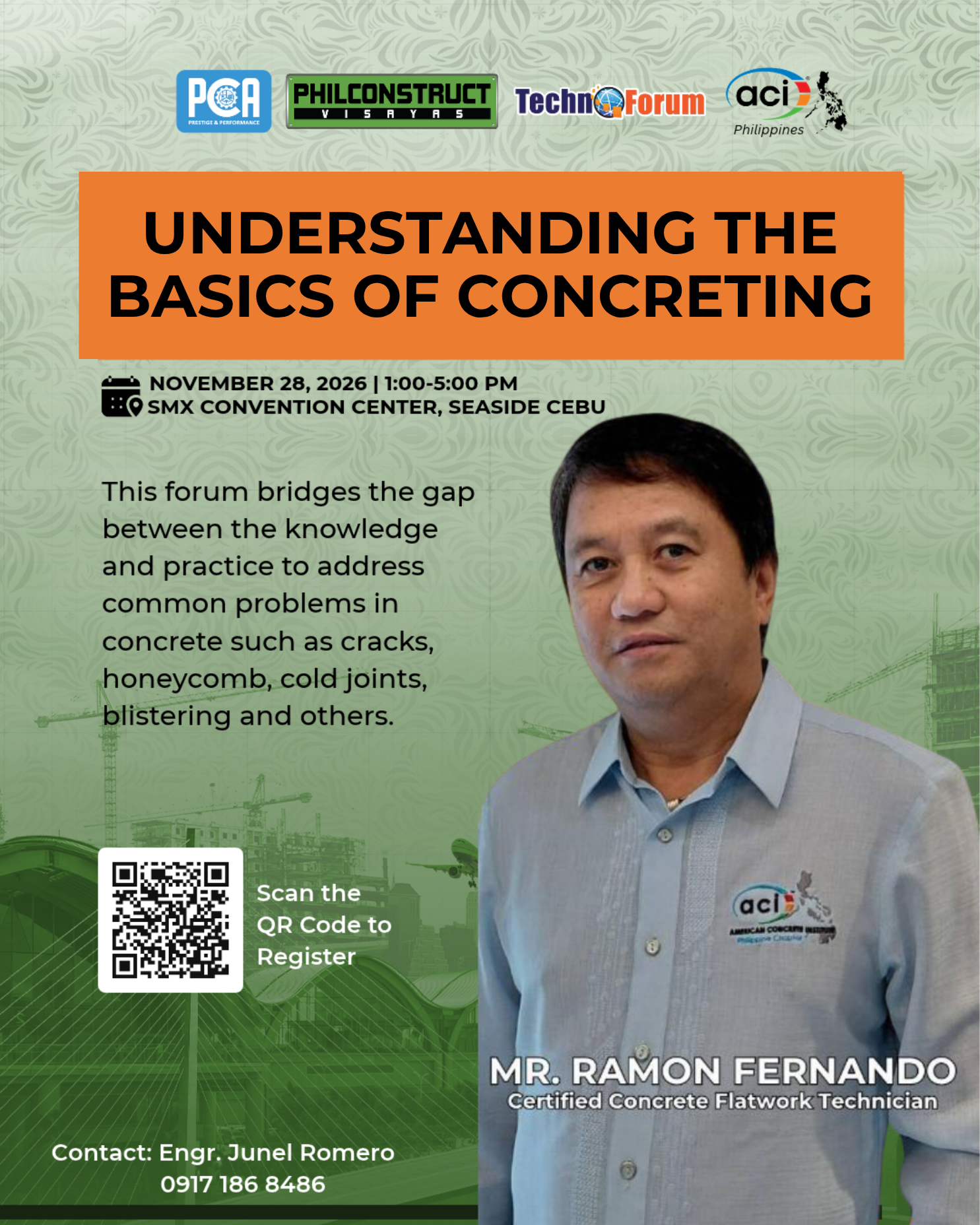
A strong structure starts with a solid understanding of concrete work. This TechnoForum, Understanding the Basics of Concreting Works, is designed to bridge the gap between theory and field application by addressing common concrete issues such as cracks, honeycombing, cold joints, blistering, and other construction challenges. Ideal for contractors, engineers, supervisors, project managers, and construction professionals looking to improve quality and workmanship in concrete construction.
Happening on November 28, 2026 from 1:00 PM to 5:00 PM at SMX Convention Center, Seaside Cebu. The forum will feature Mr. Ramon Fernando Jr., Certified Concrete Flatwork Technician, who will share practical insights, industry best practices, and proven techniques for achieving durable and high-quality concrete structures.
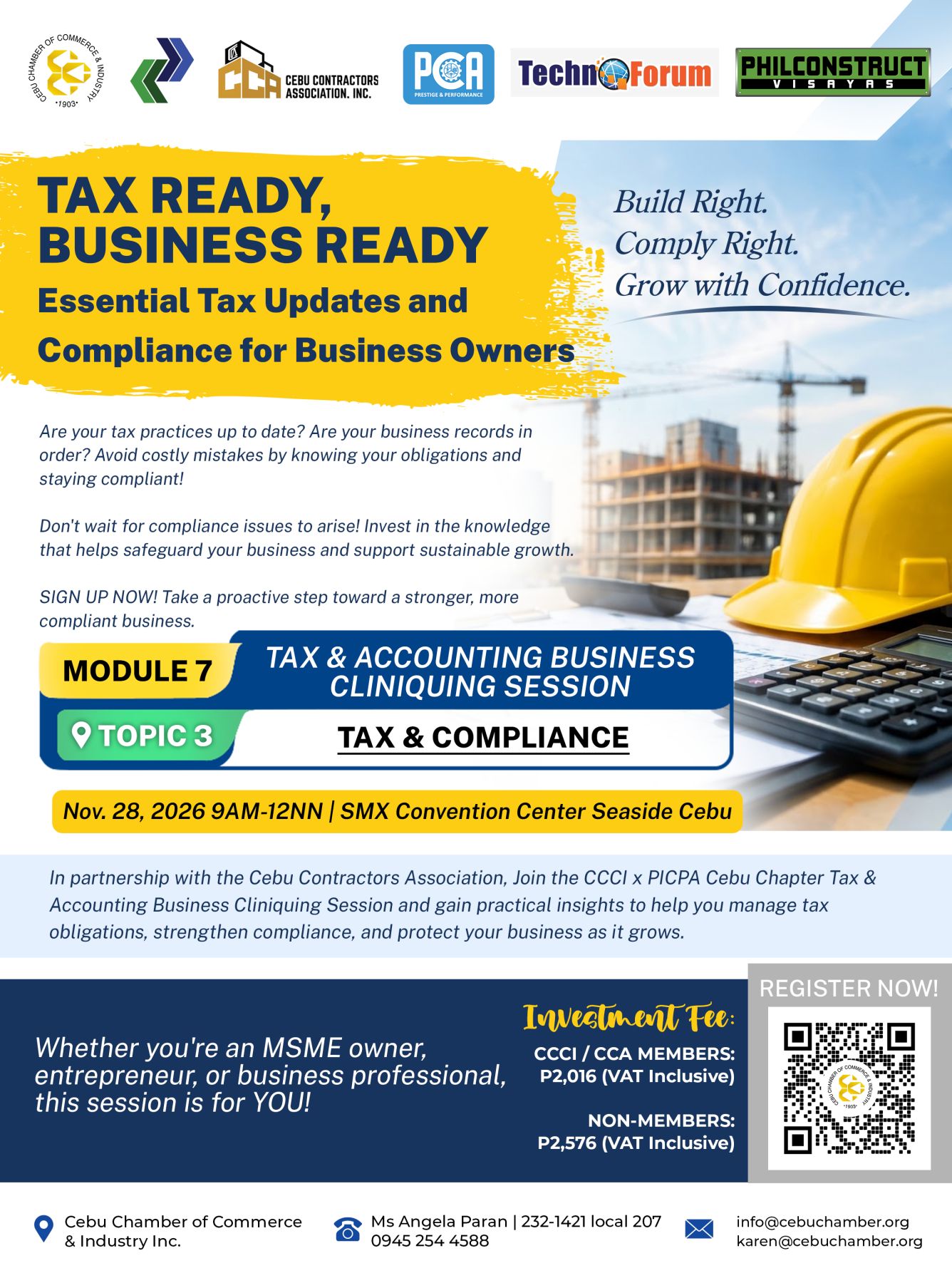
Are your tax practices up to date? Are your business records in order? Avoid costly mistakes by knowing your obligations and staying compliant!
Don't wait for compliance issues to arise! Invest in the knowledge that helps safeguard your business and support sustainable growth.
SIGN UP NOW! Take a proactive step toward a stronger, more compliant business.
Brief Description
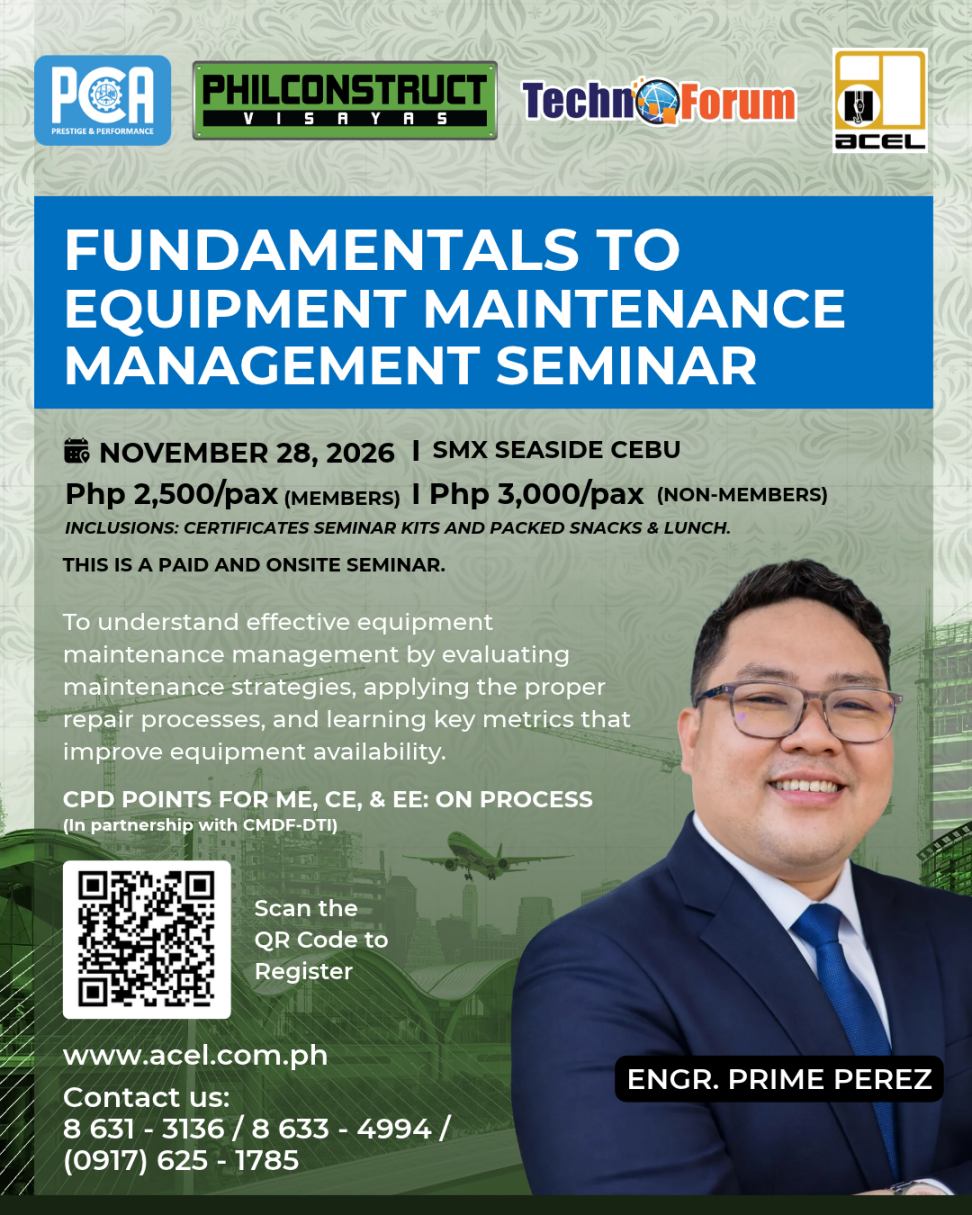
This 7-hour seminar provides an overview of equipment management throughout its lifecycle, from selection and acquisition to operation, maintenance, repair, and replacement. Participants will explore maintenance strategies, repair decision-making, and lifecycle optimization, as well as tools and systems for monitoring, recording, and managing equipment fleets. Through technical discussion and applied exercises, the seminar aims to strengthen equipment availability, operational efficiency, productivity, and data-driven asset management.
Learning Objectives
At the end of the seminar, participants should be able to:
- Explain the fundamental principles and key components of effective equipment management throughout the equipment lifecycle.
- Evaluate equipment lifecycle considerations, including service life, technological life, and economic life, and their implications for maintenance and replacement decisions.
- Differentiate preventive, predictive, and corrective maintenance approaches and identify when each is appropriate.
- Develop structured maintenance and repair plans using equipment condition, reliability indicators, operational requirements, and maintenance history.
- Compare repair-after-failure and repair-before-failure strategies, including fixed-interval and condition-based maintenance.
- Make informed repair, rebuild, or replacement decisions based on technical, economic, and operational considerations.
- Identify the key maintenance and repair management processes and explain how planning, scheduling, parts management, condition monitoring, and performance evaluation contribute to equipment fleet performance.
- Use equipment management tools and monitoring systems to support reliability, cost control, operational efficiency, and lifecycle performance.
Brief Description
Situations & Conclusions
This section identifies common pitfalls in construction projects and provides strategic takeaways to avoid them:
- Managing Owner Expectations: Projects often begin with unrealistic demands. Success requires prioritizing objectives and establishing a shared, documented vision.
- Addressing Complexity: Modern construction is complicated by unassessed physical conditions and conflicting stakeholder requirements. Owners must be guided to avoid vague scopes, unrealistic schedules, and underestimated budgets.
- The Value of Planning: Planning now often takes longer than execution; it is defined as "anticipating everything that can go wrong" so execution can happen quickly and precisely.
- Contractual Relationships: Contracts should foster collaboration rather than competition. They must be flexible enough to handle changes through integrated change control systems.
- The "Bigger Picture": Project managers must look beyond just cost and schedule to ensure the project delivers its intended business value and strategic benefits. The Ten Core Principles
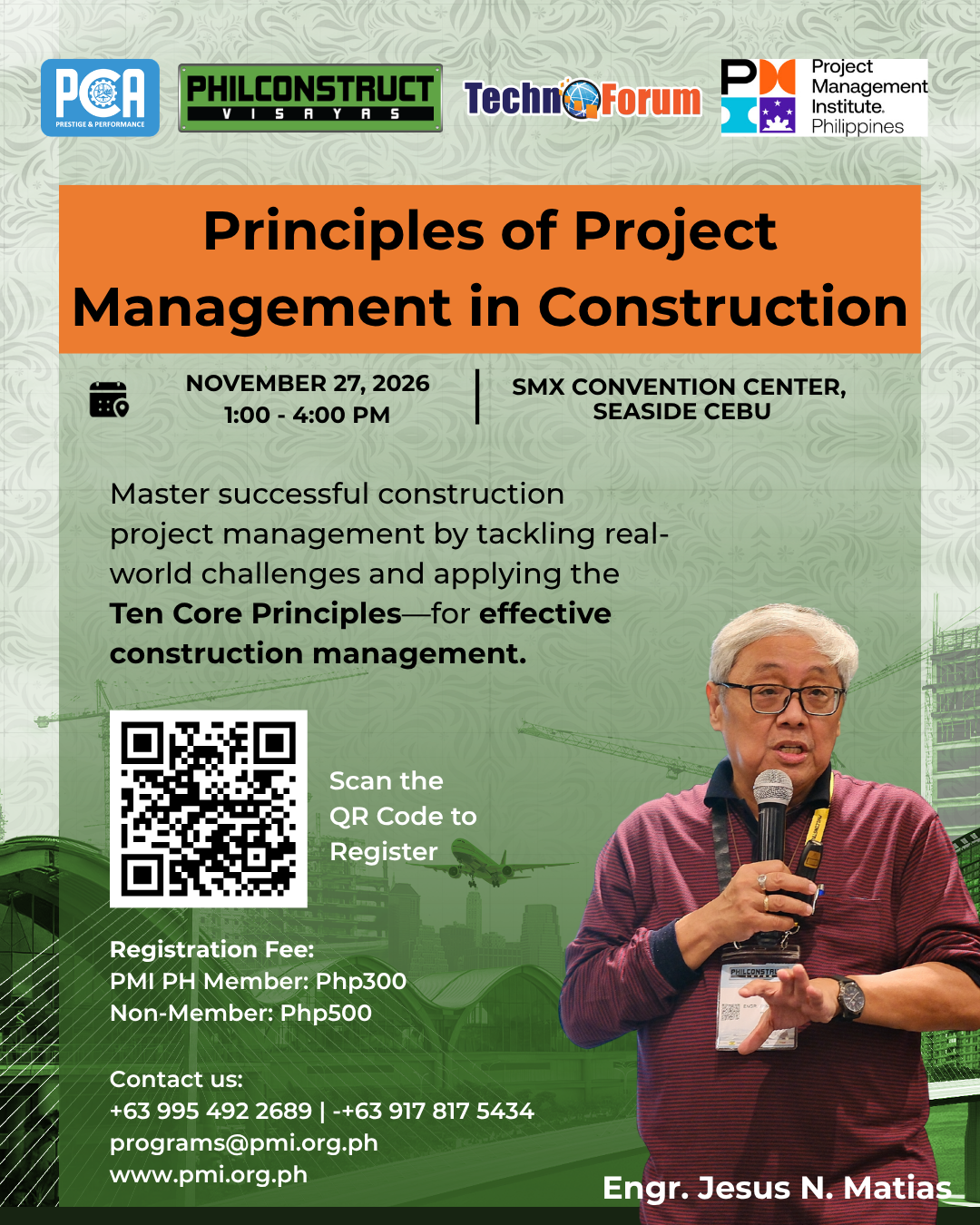
The course outlines ten fundamental principles for effective construction management:
- Project Chartering: Understanding the "WHY" to set a clear vision.
- Stakeholder Analysis: Identifying who influences or is affected by the project.
- Risk Analysis: Understanding uncertainties and documenting "non-negotiable" constraints.
- Requirements Documentation: Balancing and fixing stakeholder requirements as the primary input for scope.
- Product Scope: Defining "WHAT" deliverables will satisfy requirements.
- Non-Product Scope: Defining "HOW" the work will be done, including methods and processes.
- Project Scope: The combination of Product Scope and Non-Product Scope.
- Project Cost and Schedule: Estimating reasonable time and budget while considering shared risks.
- Fair Contract: Establishing a legal framework to sustain relationships until closure.
- Integrated Change Control: Implementing systems to mutually approve and manage changes in scope, cost, or schedule.
Learning Objectives
Upon completing this module, participants will be able to move beyond basic cost and schedule metrics to deliver true strategic value by aligning stakeholder expectations with documented requirements and a clear project vision. They will master the ability to manage construction complexity through proactive, front-loaded planning and risk analysis, defining a comprehensive project scope that covers both "what" is being built and "how" the work is executed. Ultimately, learners will be equipped to establish collaborative, fair contracts and navigate integrated change control systems, ensuring that unavoidable adjustments to time, cost, or scope are mutually approved while maintaining strong stakeholder relationships until project closure.
Brief Description
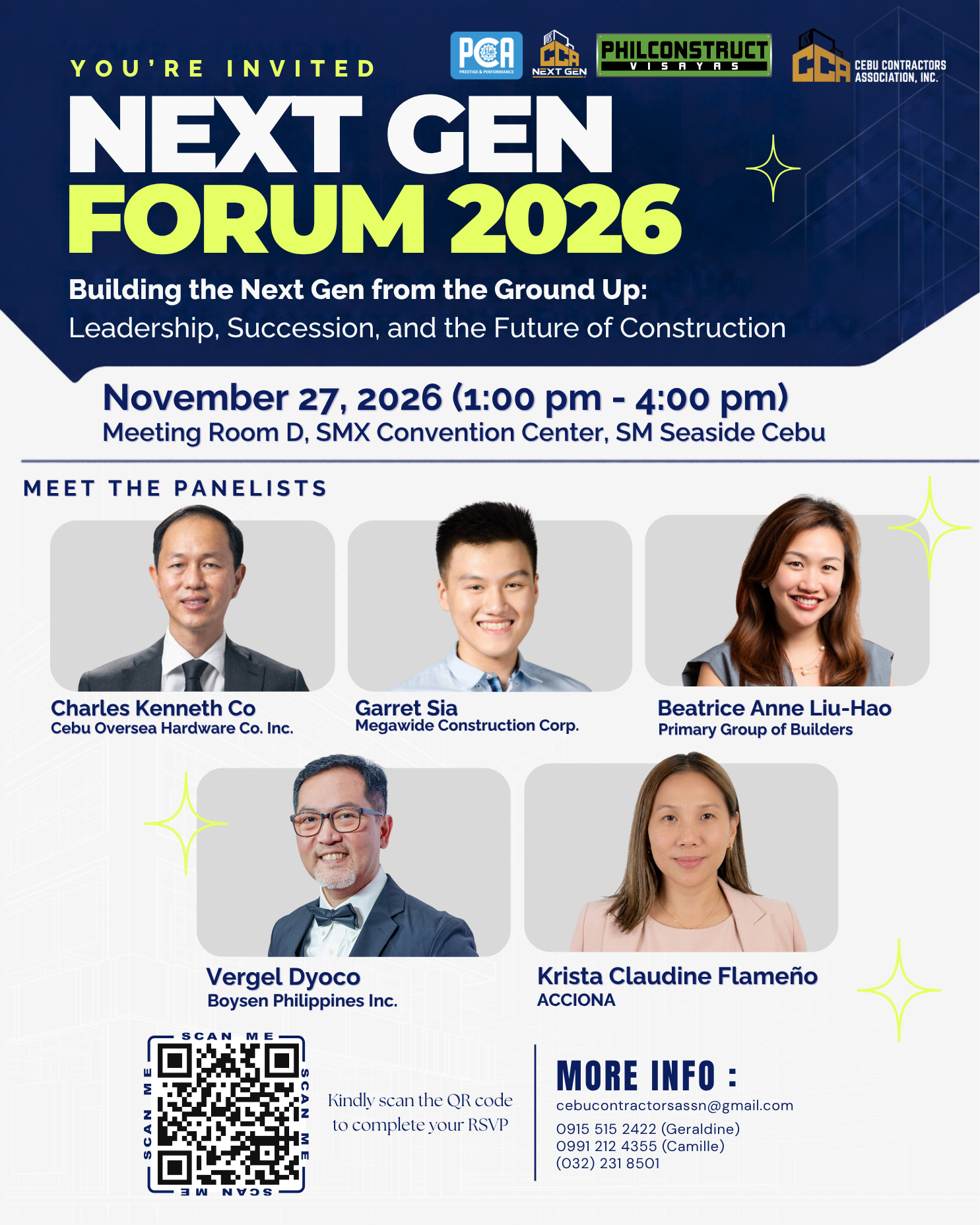
Across the construction sector, many businesses are navigating an important generational shift. Family-owned companies are preparing the next generation to take on greater responsibility, while professional managers and emerging leaders are stepping into increasingly complex roles. At the same time, global companies are developing leadership pipelines designed to sustain performance, culture, and capability across markets and generations.
Against this backdrop, Next Gen Forum 2026 will bring together different perspectives from the construction industry to explore a fundamental question:
How do we deliberately build the leaders who will carry the industry forward?
The forum will focus on leadership, succession, and the development of the next generation, with particular attention to the experiences and lessons that shape people long before they formally step into leadership.
Succession is often thought of as a question of who takes over next. But effective succession starts much earlier. It involves creating opportunities to learn, developing competence and judgment, transferring values and institutional knowledge, and giving people the experience and responsibility they need to grow into leadership.
In construction, this idea is especially relevant. Leaders are developed not only in the boardroom, but through projects, jobsites, teams, clients, challenges, and decisions made along the way. Like construction itself, leadership is built over time—from the ground up.
Learning Objectives
- Recognize the experiences, values, and competencies that shape effective leaders in the construction industry
- Explore effective succession planning strategies in preparing the next generation for leadership and ensuring continuity in family-owned businesses and established organizations
- Gain insights from family business successors, professional managers, and emerging leaders on the challenges, lessons and opportunities involved in preparing for leadership
- Recognize the shared responsibility of current leaders and organizations in nurturing the next generation to sustain performance, preserve institutional knowledge, and advance the construction industry
Brief Description
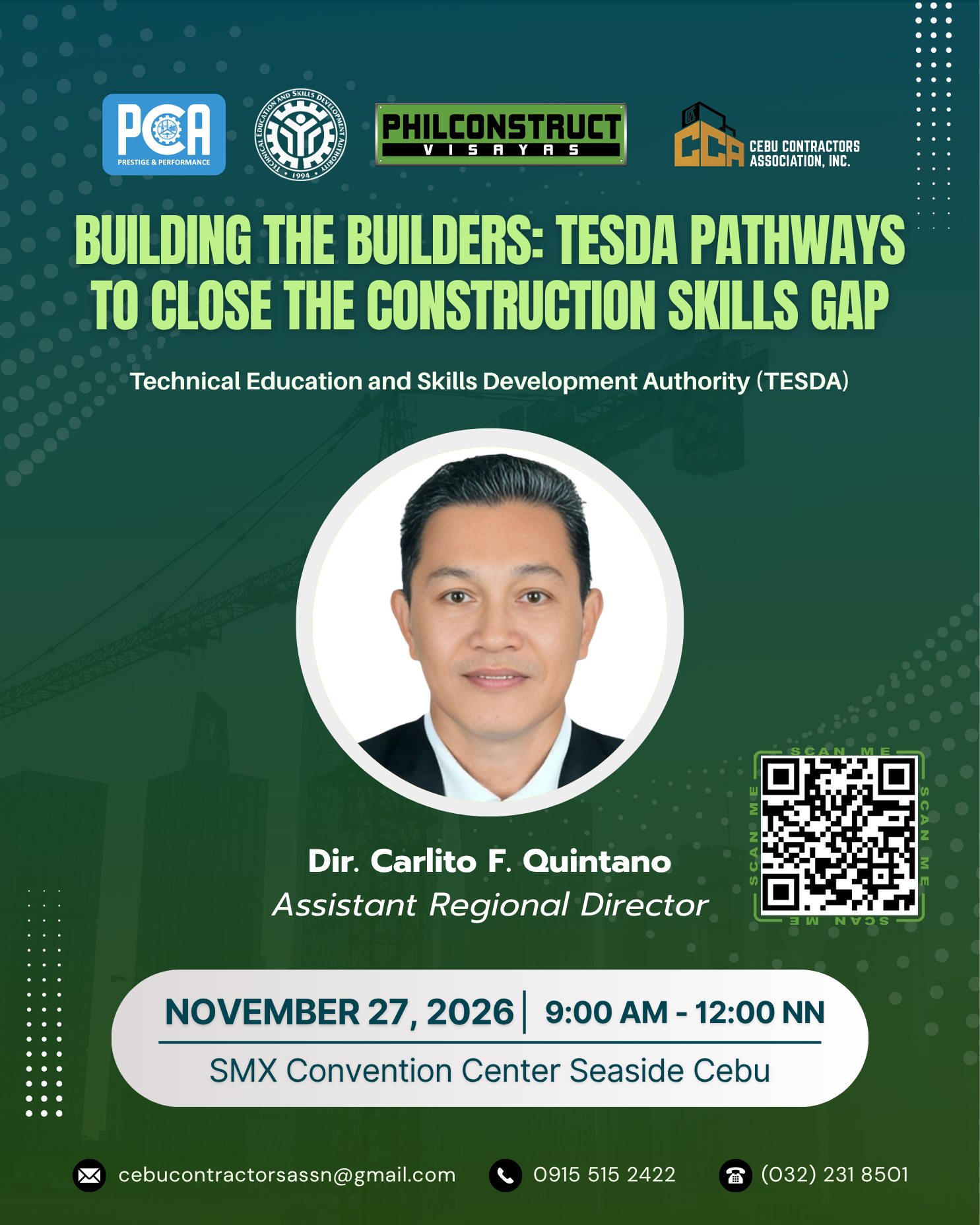
The construction industry faces a serious shortage of skilled workers, and hiring alone can’t close the gap. In this practical session, Dir. Carlito F. Quintano, Assistant Regional Director of TESDA, presents programs contractors can use right away: Enterprise-Based Education and Training (EBET), Micro-credentialing, and National Certification (NC). He’ll cover how to apply, the requirements, the support available, and whom to contact.
SKILLS will then present its Industry Certification (IC), or Builders Assistant. It builds on TESDA NCs to develop workers who are experts in a full scope of work, such as structural or finishing works, instead of a single trade. These workers are more productive on site and more valuable to contractors. An open forum follows.
Learning Objectives
- Identify TESDA programs that contractors and workers can avail of to address manpower shortages.
- Explain how a contractor becomes an EBET training partner, and the roles of TESDA and the contractor.
- Match micro-credentials and NCs to the construction trades with the greatest shortages.
- Outline how to apply for each program, including requirements, costs, available support, and contacts.
- Explain how the SKILLS IC (Builders Assistant) builds on NCs to develop scope-based experts who are more productive and valuable.
BRIEF DESCRIPTION
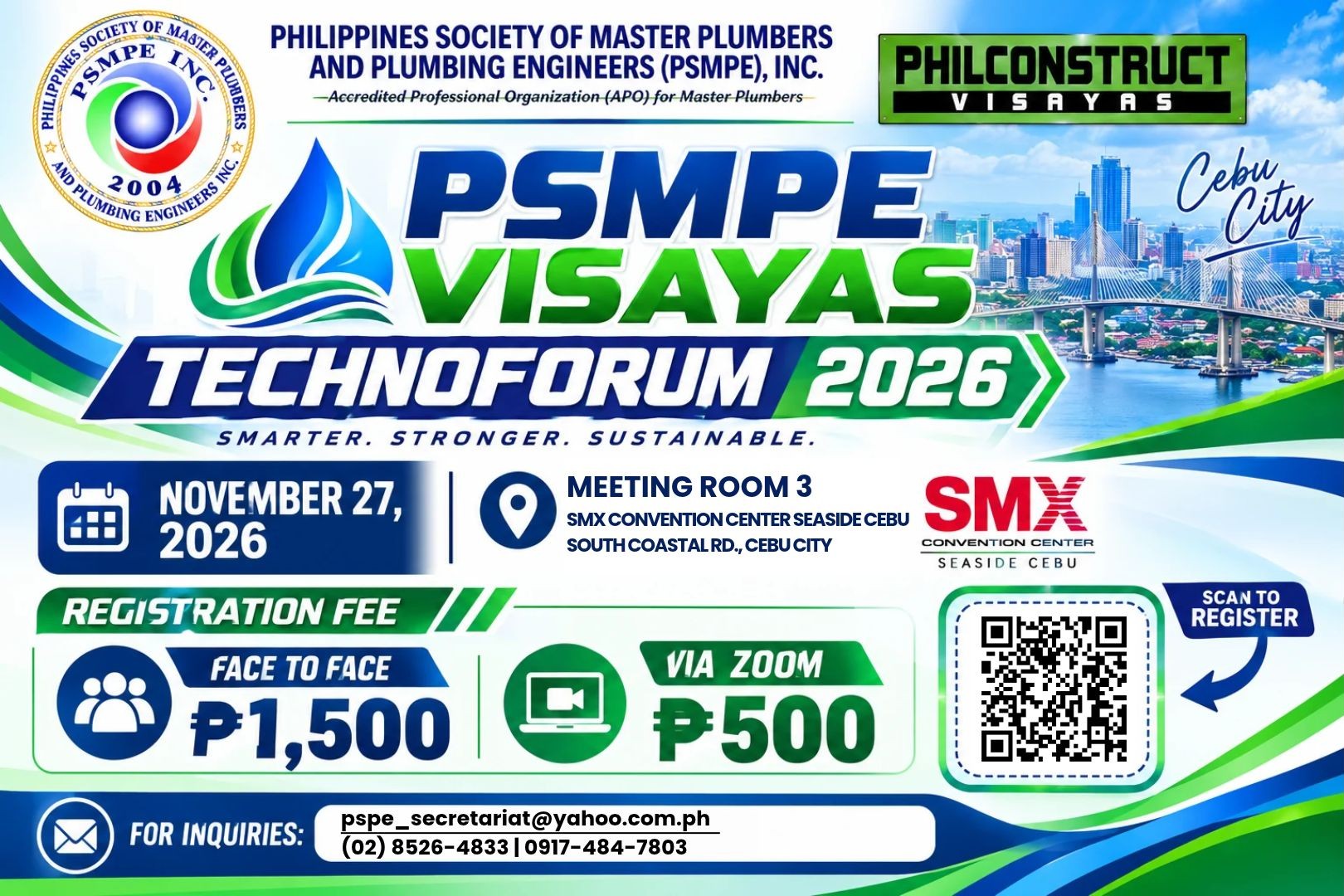
The PSMPE Visayas Technoforum 2026 is a professional development program designed to enhance the knowledge, competence, and professional practice of Master Plumbers and Plumbing Engineers in the areas of plumbing law compliance, smart plumbing technologies, flood resilience, and sustainable plumbing systems. The program provides participants with relevant technical and regulatory knowledge that may be applied in the planning, design, installation, operation, maintenance, and enforcement of plumbing systems.
LEARNING OBJECTIVES
At the end of the program, participants will be able to demonstrate improved understanding of current plumbing regulations, emerging smart plumbing technologies, flood-resilient plumbing approaches, and sustainable plumbing system principles, and apply these concepts in their professional practice.
Strengthening Academe-Industry Ties: CIAP Document 102 In Visayas
Philippine Domestic Construction Board (PDCB)
Brief Description
The Philippine Domestic Construction Board (PDCB), an implementing arm of the Construction Industry Authority of the Philippines (CIAP), works to promote fair, equitable, and realistic contract conditions in construction as one of its priority programs, pursuant to its mandate under Presidential Decree No. 1746.
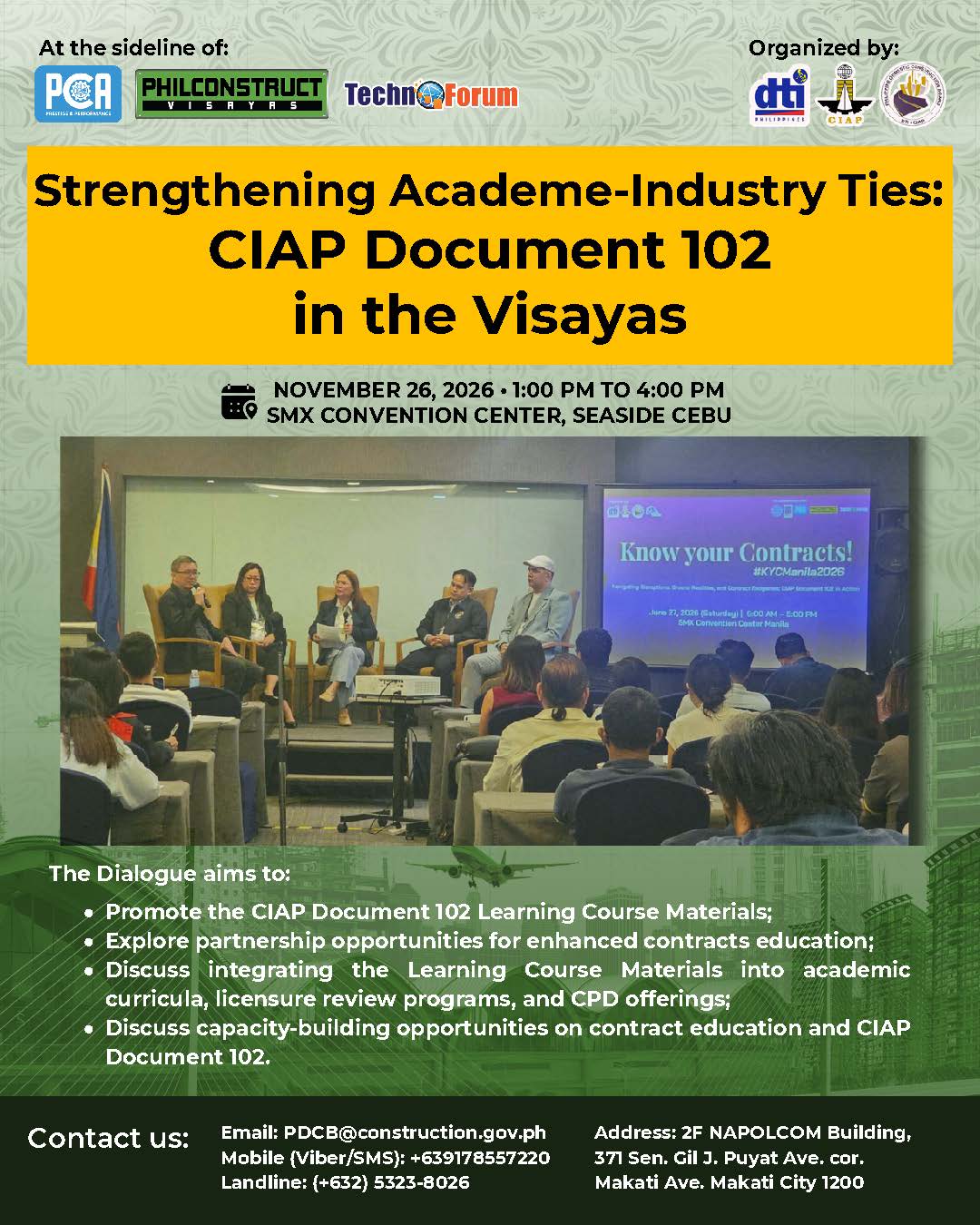
As part of its continuing effort to promote the adoption of fair, balanced, and realistic construction contract conditions, and building on the launch of the CIAP Document 102 Learning Course Materials at the University of Santo Tomas (UST) on 17 April 2026 and the first leg of the Dialogue in Davao City on 04 September 2026, the PDCB will conduct a continuation of the Dialogue for the Visayas region, entitled “Strengthening Academe-Industry Ties: CIAP Document 102 in the Visayas”. The Dialogue aims to engage partner agencies and academic institutions in the region in adopting, integrating, and continuing to promote the Learning Course Materials within their respective curricula, licensure, and continuing professional development (CPD) programs.
The Dialogue aims to gather 40 participants from partner agencies and organizations, including:
- Private Universities and State Universities and Colleges (SUCs) in the Visayas;
- Professional Regulation Commission (PRC);
- Commission on Higher Education (CHED); and
- Other partner agencies and organizations.
Learning Objectives
The Dialogue aims to:
- Promote the CIAP Document 102 Learning Course Materials;
- Explore partnership opportunities for enhanced contracts education;
- Discuss integrating the Learning Course Materials into academic curricula, licensure review programs, and CPD offerings;
- Discuss capacity-building opportunities on contract education and CIAP Document 102.
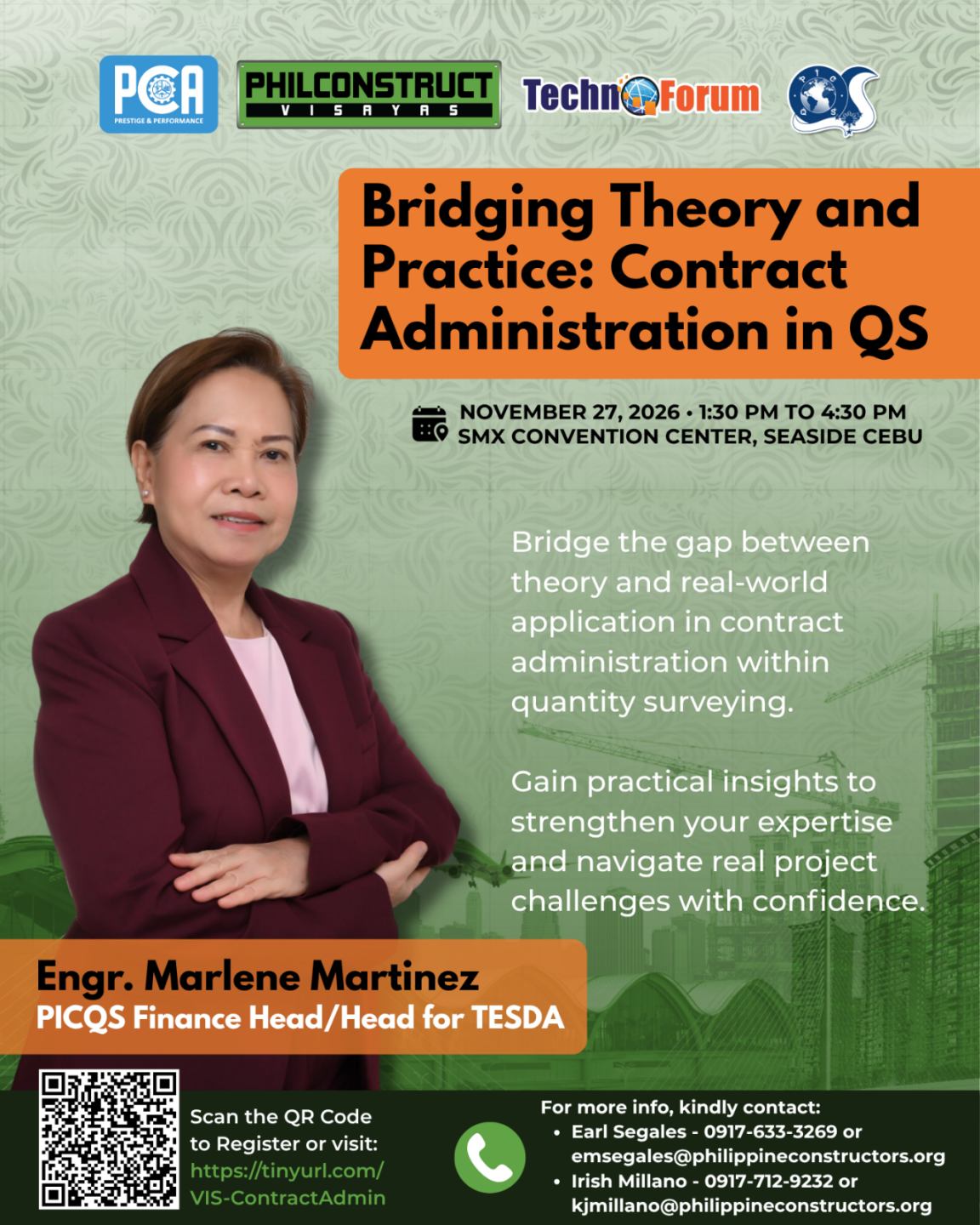
BRIEF DESCRIPTION
This session explores the critical role of contract administration in quantity surveying by bridging theoretical knowledge with real-world application. It highlights practical approaches, common challenges, and best practices in managing construction contracts to ensure project success.
LEARNING OBJECTIVES
By the end of this session, participants will be able to:
- To understand the fundamentals of contract administration in quantity surveying
- To demonstrate how theoretical concepts are applied in actual construction projects
- To identify common issues and challenges in contract management and how to address them
- To enhance participants’ skills in managing contracts, documentation, and stakeholder coordination
- To promote effective and compliant contract practices within the construction industry
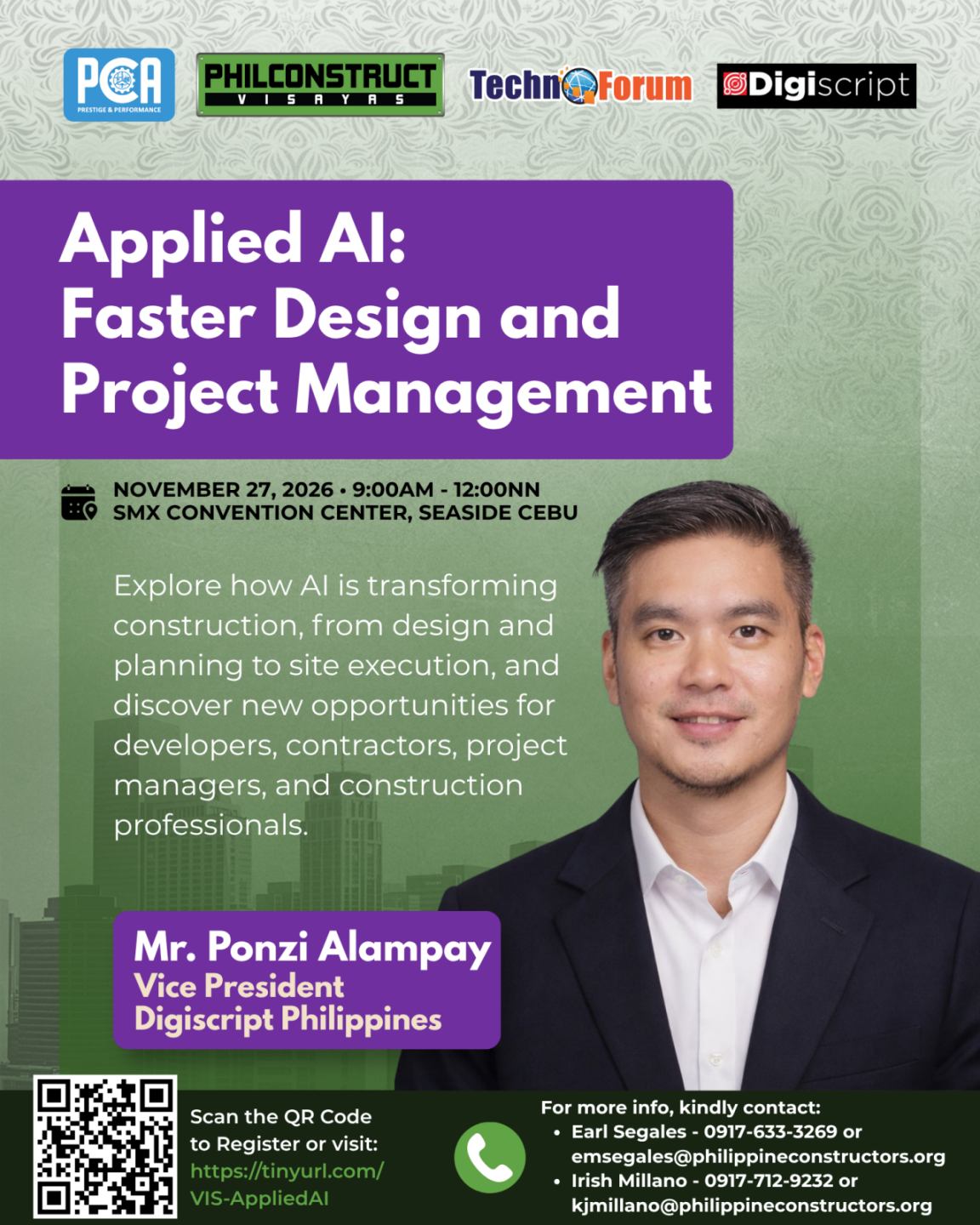
BRIEF DESCRIPTION
Presented in partnership with Makati Development Corporation and Digiscript Philippines, this session explores Artificial Intelligence applications in construction management, design and planning. Delving into how AI is transforming the built environment by bridging the gap between digital data and real-world site conditions.
LEARNING OBJECTIVES
The core objective is to showcase how AI drastically accelerates complex tasks, streamlines and automates workflows, enhances site analysis and quicker decisions for cost avoidance, quality, and overall better project delivery and execution.
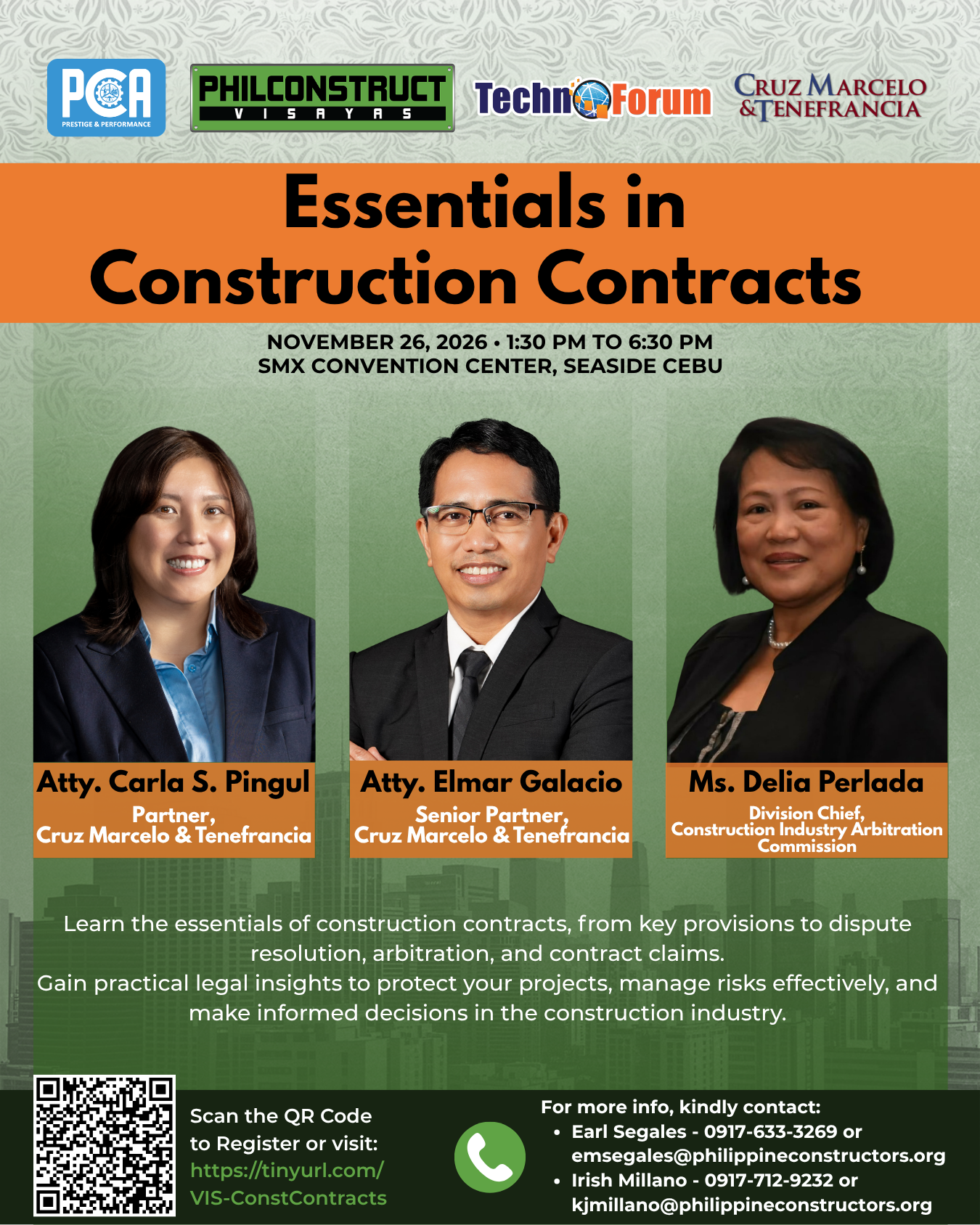
BRIEF DESCRIPTION
Strengthen your foundation in construction contracts through this upgraded session designed to provide essential legal knowledge for industry professionals.
This session will cover key principles in construction law, including contract interpretation, common contractual issues, dispute resolution, arbitration processes, and contract claims. Participants will gain a clearer understanding of their rights, obligations, and risk exposures in construction projects.
Learn the practical legal insights and real-world applications to help professionals navigate contracts with confidence and minimize disputes in the construction industry.
LEARNING OBJECTIVES
By the end of this session, participants will be able to:
- Understand the fundamentals of construction contracts and legal frameworks
- Identify key contract provisions and their implications in project execution
- Recognize common causes of disputes and how to address them effectively
- Gain insights into the arbitration process and dispute resolution mechanisms
- Understand the basics of contract claims, entitlements, and risk management